
ಚಿನ್ನಕ್ಕ ಮತ್ತು ಅವಳ ಅಜ್ಜಿChinnakka and her Grandmother
ಒಂದು ಸಣ್ಣ ಹಳ್ಳಿಯಲ್ಲಿ ಚಿನ್ನಕ್ಕ ಎಂಬ ಪುಟ್ಟ ಹುಡುಗಿ ತನ್ನ ಅಜ್ಜಿಯ ಜೊತೆಗೆ ಒಂದು ಗುಡಿಸಿಲಿನಲ್ಲಿ ವಾಸಿಸುತ್ತಿದ್ದಳು. ಅವರು ತುಂಬಾ ಬಡವರು. ಒಂದು ದಿನ ಅವರ ಮನೆಯಲ್ಲಿ ತಿನ್ನಲು ಏನು ಇರಲಿಲ್ಲ. ಆಗ ಗೆಡ್ಡೆ ಗೆಣಸು ತರಲು ಚಿನ್ನಕ್ಕ ಕಾಡಿಗೆ ಹೊರಟಳು.
ಕಾಡು ಮತ್ತು ಕೊರವಂಜಿThe Forest and the Wise Woman
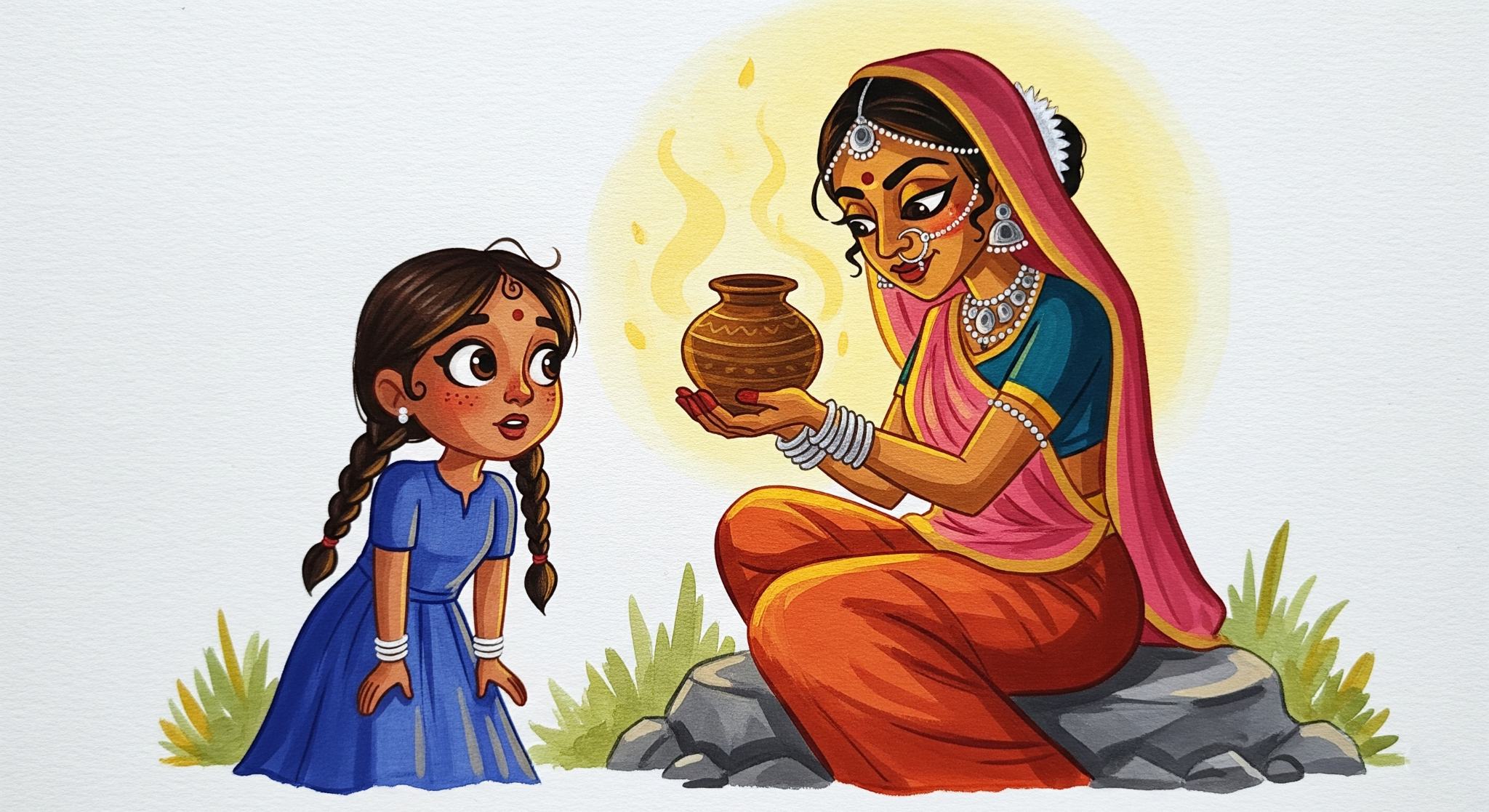
ಆ ಕಾಡಿನಲ್ಲಿ, ಬಣ್ಣ ಬಣ್ಣದ ಬಟ್ಟೆ ಉಟ್ಟ, ಒಬ್ಬ ಕೊರವಂಜಿ ಕುಳಿತಿದ್ದಳು. ಆಕೆ ಚಿನ್ನಕ್ಕನನ್ನು ನೋಡಿ ಕೇಳಿದಳು: "ತಂಗಿ, ಇಲ್ಲಿ ಏನು ಹುಡುಕುತ್ತಿದ್ದೀಯ?"
ಚಿನ್ನಕ್ಕನ ಕಣ್ಣು ಮಂಜಾಯಿತು... "ಅಮ್ಮ, ನಮ್ಮ ಮನೆಯಲ್ಲಿ ತಿನ್ನಲು ಏನೂ ಇರಲಿಲ್ಲ. ಅದಕ್ಕಾಗಿ ಇಲ್ಲಿ ಹಣ್ಣು, ಗೆಡ್ಡೆ, ಗೆಣಸು ಏನಾದರೂ ಸಿಗುತ್ತಾ ಅಂತ ಹುಡುಕ್ತಿದ್ದೀನಿ." ಈ ಮಾತು ಕೇಳಿ ಕೊರವಂಜಿಗೆ ತುಂಬಾ ದುಃಖವಾಯಿತು.
"ಅಯ್ಯೋ ಪಾಪದ ಮಗುವೆ… ತಾಳು, ತಾಳು," ಎಂದು ಕೈಯಲ್ಲಿ ಛ್ಹೂ ಮಂತ್ರ ಮಾಡಿದಳು. ಆಗ ಮಿಂಚು ಹೊಳೆಯುವ ಒಂದು ಪುಟ್ಟ ಪಾತ್ರೆ ಪ್ರಕಟವಾಯಿತು.
Chinnakka's eyes filled with tears. "There's nothing at home, Amma. My grandmother and I haven't eaten. I came to find something - anything." Koravanji closed her eyes for a moment. Then, with a murmur and a gentle flick of her hand, a small, gleaming pot appeared from the air.
ಮಾಯದ ಮಂತ್ರThe Magic Mantra
ಆ ಪಾತ್ರೆಯನ್ನು ಚಿನ್ನಕ್ಕನ ಕೈಗೆ ಕೊಟ್ಟು: "ಈ ಪಾತ್ರೆ ಮಾಯದ್ದು. ಇದನ್ನು ಒಲೆಯ ಮೇಲೆ ಇಟ್ಟು, ಹೀಗೆ ಹೇಳು:"
"ಆಗ ಅದರೊಳಗೆ ರುಚಿರುಚಿಯಾದ ಬಿಸಿ ಬಿಸಿ ಹುಗ್ಗಿ ತಯಾರಾಗುತ್ತೆ. ತಿನ್ನೋಕೆ ಸಾಕಾಯಿತು ಅನ್ಸಿದ್ರೆ ಹೀಗೆ ಹೇಳು:"
"ಒಂದು ಮಾತೂ ಕೂಡ ತಪ್ಪಬಾರದು. ನೆನಪಿಟ್ಟುಕೋ - ಮಂತ್ರದಲ್ಲಿ ತಪ್ಪಾದರೆ ಫಲಿತಾಂಶ ತಲೆಕೆಳಗು!"
ಹೊಟ್ಟೆಕಿಚ್ಚಿನ ತಿಮ್ಮಕ್ಕJealous Thimmakka
ಚಿನ್ನಕ್ಕ ಸಂತೋಷದಿಂದ ಪಾತ್ರೆಯನ್ನು ಹಿಡಿದು ಓಡೋಡಿ ಮನೆಗೆ ಬಂದು, ಅಜ್ಜಿಗೆ ಪೂರ್ತಿ ಘಟನೆ ಹೇಳಿದಳು. ನಂತರ, ಆ ಮಾಯದ ಪಾತ್ರೆಯನ್ನು ಒಲೆಯ ಮೇಲೆ ಇಟ್ಟು, ಮಂತ್ರದಂತೆ ಹೇಳಿದಳು: "ಪಾತ್ರೆ ಪಾತ್ರೆ, ಪುಟ್ಟ ಪಾತ್ರೆ, ಚಿಣಿ-ಕಿಣಿ ಪಾತ್ರೆ, ಹುಗ್ಗಿ ಮಾಡು!"
ಬಿಸಿ ಬಿಸಿ ಹುಗ್ಗಿ ಪಾತ್ರೆಯೊಳಗೆ ತುಂಬಿತು. ತಿನ್ನೋಕೆ ಸಾಕಾದ ಮೇಲೆ, ಚಿನ್ನಕ್ಕ ಮಂತ್ರದಂತೆ ನಿಲ್ಲಿಸಲು ಹೇಳಿದಳು: "ಪಾತ್ರೆ ಪಾತ್ರೆ, ಪುಟ್ಟ ಪಾತ್ರೆ, ಕಣಿ-ಚಿಣಿ ಪಾತ್ರೆ, ಸಾಕು ನಿಲ್ಲಿಸು!"
ಆ ದಿನದಿಂದ ಚಿನ್ನಕ್ಕ ಮತ್ತು ಅಜ್ಜಿ ಎಂದೂ ಹಸಿದಿರಲಿಲ್ಲ. ಯಾಕೆಂದರೆ ಈ ಪಾತ್ರೆ ಯಾವಾಗ ಬೇಕಾದರೂ ರುಚಿಯಾದ ಹುಗ್ಗಿ ತಯಾರಿಸುತ್ತಿತ್ತು. ಅಷ್ಟೇ ಅಲ್ಲ, ಚಿನ್ನಕ್ಕ ತನ್ನ ಅಕ್ಕಪಕ್ಕದ ಮಕ್ಕಳಿಗೂ ಹುಗ್ಗಿ ಹಂಚುತ್ತಿದ್ದಳು. ಹೀಗಾಗಿ ಎಲ್ಲರೂ ಅವಳನ್ನು "ಹುಗ್ಗಿಯ ಚಿನ್ನಕ್ಕ" ಅಂತಾ ಕರೆಯುತ್ತಿದ್ದರು.
ಆದರೆ, ಚಿನ್ನಕ್ಕನ ಪಕ್ಕದ ಮನೆಯ ತಿಮ್ಮಕ್ಕನಿಗೆ ಇದು ಸಹಿಸಲಿಲ್ಲ. ಹುಗ್ಗಿಯ ವಾಸನೆ..., ಮಕ್ಕಳ ಸಂತೋಷ..., ಇವೆಲ್ಲ ನೋಡಿ ಅವಳಿಗೆ ಹೊಟ್ಟೆಕಿಚ್ಚಾಯಿತು. ಕಿಟಕಿ ಮರೆಯಲ್ಲಿ ನಿಂತು ಚಿನ್ನಕ್ಕನ ಮಂತ್ರವನ್ನ ಕೇಳಿದಳು.
From that day, Chinnakka and her ajji were never hungry again. More than that, Chinnakka shared the warm huggi with the neighbourhood children every day, and everyone began calling her lovingly: "Huggiya Chinnakka" - Chinnakka of the porridge.
But her next-door neighbour Thimmakka could not bear it. The smell of the huggi, the laughter of the children - jealousy burned inside her. She crept to the window and listened. She heard every word of the mantra.
ಹುಗ್ಗಿಯ ಹೊಳೆ!A River of Porridge!
ಒಂದು ದಿನ, ಚಿನ್ನಕ್ಕ ಮತ್ತು ಅಜ್ಜಿ ಪಕ್ಕದ ಊರಿನಲ್ಲಿ ಮದುವೆಗೆ ಹೋಗಿದ್ದಾಗ, ತಿಮ್ಮಕ್ಕ ಚಿನ್ನಕ್ಕನ ಗುಡಿಸಿಲಿಗೆ ನುಗ್ಗಿ, ಪಾತ್ರೆಯನ್ನು ಕದ್ದಳು. ಪಾತ್ರೆಯನ್ನು ತನ್ನ ಮನೆಯ ಒಲೆಯ ಮೇಲೆ ಇಟ್ಟು ಹೇಳಿದಳು: "ಪಾತ್ರೆ ಪಾತ್ರೆ, ಪುಟ್ಟ ಪಾತ್ರೆ, ಚಿಣಿ-ಕಿಣಿ ಪಾತ್ರೆ, ಹುಗ್ಗಿ ಮಾಡು!"
ಆಗ ಪಾತ್ರೆಯಲ್ಲಿ ಹುಗ್ಗಿ ಉಕ್ಕಿ ಉಕ್ಕಿ ಹರಿಯ ತೊಡಗಿತು. ತಿಮ್ಮಕ್ಕ ಗಾಬರಿಯಾದಳು. ನಿಲ್ಲಿಸಲು ಹೇಳಿದಳು: "ಪಾತ್ರೆ ಪಾತ್ರೆ, ಸಿಲಿಕಣಿ ಪಾತ್ರೆ, ಸಾಕು ನಿಲ್ಲಿಸು!" ಆದರೇ ಅದು ನಿಲ್ಲಲಿಲ್ಲ. "ಹುಗ್ಗಿ ಹುಗ್ಗಿ, ಪಾತ್ರೆ ನೀನು ಸಾಯಿ!" ಎಂದು ಕಿತ್ತಾಡಿದಳು. ಪಾತ್ರೆ ಮಾತ್ರ ಕಿವಿ ಕೊಡಲಿಲ್ಲ!
ಹುಗ್ಗಿಯು ಅಡಿಗೆಮನೆಯಿಂದ ಹೊರಬಂದು, ಓಣಿಗೆ ಹರಿದು, ಮನೆ ತುಂಬೆಲ್ಲ ಹರಿಯಿತು. ತಿಮ್ಮಕ್ಕ ಹೆದರಿ, ಮಂಚದ ಮೇಲೆ ಹತ್ತಿ ಅಳತೊಡಗಿದಳು. ಊರಿನವರು ಹುಗ್ಗಿಯ ಹೊಳೆ ನೋಡಿ ಗಾಬರಿಯಾಗಿ ಮನೆಗಳ ಅಟ್ಟದ ಮೇಲೆ ಕುಳಿತರು.
ಆಷ್ಟರಲ್ಲಿ ಚಿನ್ನಕ್ಕ ಮತ್ತು ಅಜ್ಜಿ ಮದುವೆಯಿಂದ ಹಿಂದಿರುಗಿದರು. ಊರಿನ ಸ್ಥಿತಿ ನೋಡಿ ಚಿನ್ನಕ್ಕ ಒಂದು ಪುಟ್ಟ ದೋಣಿಯನ್ನು ತರಿಸಿದಳು. ಅದರೊಳಗೆ ಕುಳಿತು ಹುಗ್ಗಿಯ ಹೊಳೆ ದಾಟಿ ತಿಮ್ಮಕ್ಕನ ಮನೆಗೆ ತಲುಪಿದಳು.
"ಪಾತ್ರೆ ಪಾತ್ರೆ, ಪುಟ್ಟ ಪಾತ್ರೆ, ಕಣಿ-ಚಿಣಿ ಪಾತ್ರೆ, ಸಾಕು ನಿಲ್ಲಿಸು!"
ಅಷ್ಟರಲ್ಲೇ ಮಾಯಾ ಪಾತ್ರೆಯಿಂದ ಹುಗ್ಗಿಯ ಹೊಳೆ ನಿಂತಿತು. ಊರಿನವರು ಸಂತೋಷಪಟ್ಟರು. ತಮ್ಮ ತಮ್ಮ ಹಂಡೆ, ಮಡಕೆ, ಕುಡಿಕೆಗಳಲ್ಲಿ ಹುಗ್ಗಿ ತುಂಬಿಸಿಕೊಂಡರು. ತಿಮ್ಮಕ್ಕನಿಗೆ ನಾಚಿಕೆ ಆಯಿತು. ಅಂದಿನಿಂದ ಅವಳು ಚಿನ್ನಕ್ಕನ ಮೇಲೆ ಹೊಟ್ಟೆಕಿಚ್ಚು ಪಡಲಿಲ್ಲ. ಮಾಯದ ಪಾತ್ರೆಯ ಕಡೆಗೆ ಕಣ್ಣು ಹಾಕಲಿಲ್ಲ.
The huggi poured out of the kitchen, into the lane, through the doors, across the whole village. Thimmakka climbed onto her bed and wept. Villagers scrambled onto their rooftops in alarm, watching a warm, fragrant river of porridge flow through the streets.
Just then, Chinnakka and her ajji returned home from the wedding. Seeing the village submerged, Chinnakka found a small boat, rowed through the river of huggi, and reached Thimmakka's house.
In a clear, steady voice she said: "Patre Patre, Putta Patre, Kanichini Patre, Saaku Nillisu!"
The pot fell silent. The huggi river stilled. The whole village cheered - and everyone scooped the warm porridge into their own pots and pans to take home, so nothing was wasted. Thimmakka bowed her head in shame. From that day on, she never cast a jealous eye at Chinnakka or her magic pot again.
About This Story
For curious parents, teachers, and children who want to know more
What is huggi?
Huggi (ಹುಗ್ಗಿ) is a traditional Karnataka dish - a soft, sweet porridge made from rice and jaggery (unrefined cane sugar), often flavoured with cardamom, coconut, and ghee. It is one of the oldest comfort foods of the region, offered at temples and made at festivals. In this story, huggi is a symbol of abundance and warmth - the most nourishing thing Chinnakka can imagine.
Who is the Koravanji?
Koravanji (ಕೊರವಂಜಿ) is a recurring figure in Karnataka folklore - a wandering wise woman, associated with fortune-telling and magic. She appears at crossroads and in forests, often as a tester of character. Her gift always reflects the goodness she sees in the recipient. The word is also the name of a form of traditional Karnataka dance-drama in which she is a central character.
What is the moral of the story?
The story teaches several things at once: that generosity multiplies (Chinnakka shares her food and becomes beloved), that jealousy leads to chaos (Thimmakka's greed floods the village), and that true knowledge cannot be stolen - Thimmakka heard the words but did not have the wisdom to use them correctly. There is also a gentler lesson about not wasting: even the huggi flood is gathered up so nothing is lost.
Where does this story come from?
This is a traditional Kannada folk story from the Karnataka region of South India, with versions told particularly across coastal Karnataka and South Canara. Like many Indian folk tales, it was passed down orally for generations - told by grandmothers to grandchildren at bedtime or on festival evenings. The story on this page follows the version told by Chandira, who grew up hearing it in South Canara.
Is this page good for learning Kannada?
Yes - especially for diaspora children who hear Kannada spoken at home but do not always read the script. Each section of the story is presented first in Kannada script, then with an English translation. The mantra boxes include phonetic pronunciation. Reading the page alongside the YouTube video (where the story is narrated in Kannada) is a particularly good way to connect the written and spoken forms of the language.
More stories from Chandira
Explore more folk stories, children’s tales, songs and lyrics from Chandira.