
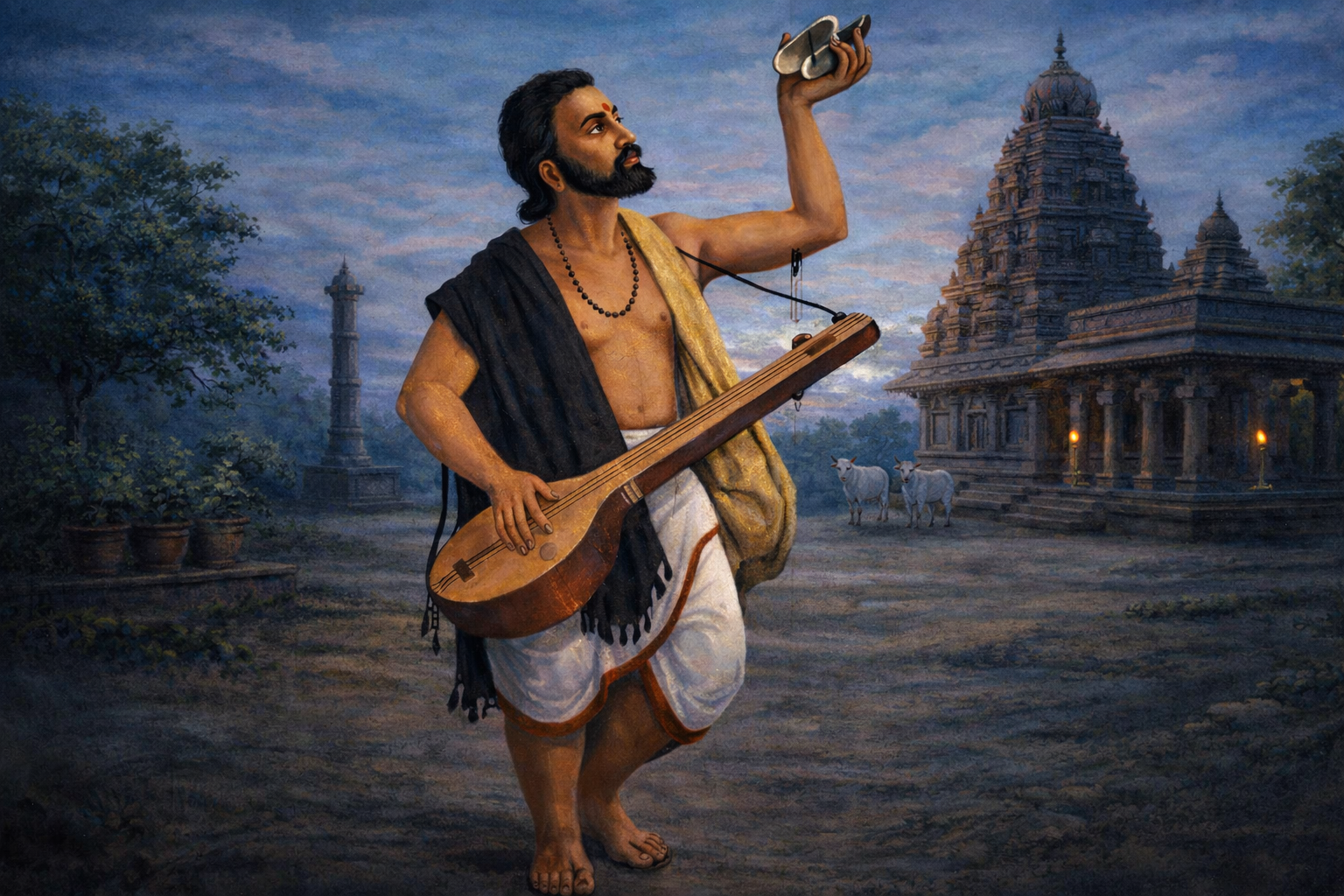
ನೀ ಮಾಯೆಯೊಳಗೋ
ನಿನ್ನೊಳು ಮಾಯೆಯೋ
ನೀ ದೇಹದೊಳಗೋ
ನಿನ್ನೊಳು ದೇಹವೋ ಹರಿಯೆ
Are you within illusion, or is illusion within you? Are you inside the body, or is the body within you, O Hari? The song opens with a profound question about where reality truly rests.
ಬಯಲೊಳಗೆ ಆಲಯವೊ
ಆಲಯದೊಳಗೆ ಬಯಲೊ
ಬಯಲು ಆಲಯವೆರಡು
ನಯನದೊಳಗೊ
ನಯನ ಬುದ್ಧಿಯ ಒಳಗೊ
ಬುದ್ಧಿ ನಯನದ ಒಳಗೊ
ನಯನ ಬುದ್ಧಿಗಳೆರಡು
ನಿನ್ನೊಳಗೊ ಹರಿಯೆ
Is the open space within the temple, or is the temple within the open space? Are both held within the eye? Is the eye within the intellect, or the intellect within the eye? In the end, both perception and understanding are gathered within you, O Hari.
ಸವಿಯು ಸಕ್ಕರೆಯೊಳಗೊ
ಸಕ್ಕರೆಯು ಸವಿಯೊಳಗೊ
ಸವಿಯು ಸಕ್ಕರೆ ಎರಡು ಜಿಹ್ವೆಯೊಳಗೊ
ಜಿಹ್ವೆ ಮನಸಿನ ಒಳಗೊ
ಮನಸು ಜಿಹ್ವೆಯ ಒಳಗೊ
ಜಿಹ್ವೆ ಮನಸುಗಳೆರಡು
ನಿನ್ನೊಳಗೊ ಹರಿಯೆ
Does sweetness belong to sugar, or does sugar belong to sweetness? Are both sugar and taste fulfilled only on the tongue? Is the tongue within the mind, or the mind within the tongue? Both taste and thought finally rest in you, O Hari.
ಕುಸುಮದಲಿ ಗಂಧವೋ
ಗಂಧದಲಿ ಕುಸುಮವೋ
ಕುಸುಮ ಗಂಧಗಳೆರಡು
ಆಘ್ರಾಣದೊಳಗೊ
ಅಸಮಭವ ಕಾಗಿನೆಲೆಯಾದಿಕೇಶವರಾಯ
ಉಸುರಲೆನ್ನಳವಲ್ಲ ಎಲ್ಲ
ನಿನ್ನೊಳಗೊ ಹರಿಯೆ
Is fragrance in the flower, or is the flower in the fragrance? Are both flower and fragrance completed in the act of smelling? O incomparable Adikeshava of Kaginele, not just breath but everything abides in you, O Hari.
Context and philosophical note
Kanakadasa uses ordinary sensory experience to ask metaphysical questions. Is perception located in the object, the sense, or the mind? Is the temple inside space, or space inside the temple? Is the body in God, or God in the body? Every comparison gently unsettles certainty.
The final movement of the song is not abstract philosophy alone. It is devotional insight. The saint arrives at the recognition that nothing stands outside Hari, not even the illusion through which we struggle to understand existence. In this sense, the song is both inquiry and surrender.
More lyrics from Chandira
Explore more Kannada bhajan lyrics, devotional songs, stories and song notes from Chandira.